Why Preventive Property Maintenance Matters
A well-built property has a quiet kind of dignity. Doors close with a certain weight. Stone sheds water the way it should. Mechanical rooms hum without drama. Paint, millwork, roofing, gutters, flashing, drainage, masonry, boilers, balconies, elevators, parkade membranes, all of it works so smoothly that owners barely notice the choreography.
That is the point of preventive property maintenance. The best maintenance does not announce itself. It preserves comfort, value, safety, and beauty before neglect has a chance to become visible.
For owners of luxury homes, heritage buildings, rental portfolios, strata properties, and multi-family residences, maintenance is not a back-office chore. It is a form of asset stewardship. The difference between a property that matures gracefully and one that ages expensively often comes down to ordinary tasks performed with uncommon discipline.
A roof inspection before winter. A moisture reading after a suspicious stain. A balcony membrane review before water reaches reinforcing steel. A service log that tells the truth. These are not glamorous details, but they are the details that protect architecture, capital, and peace of mind.
The quiet economics of prevention
Most owners understand maintenance intellectually. Fewer appreciate the financial shape of deferred maintenance until they have lived through it.
A small leak at a roof penetration might cost a few hundred dollars to diagnose and repair when caught early. Left alone through a wet season, it can saturate insulation, stain ceiling finishes, damage electrical components, promote mold growth, and compromise structural elements. The final invoice may be ten or twenty times higher, and that does not include disruption, insurance complications, tenant relations, or lost use of the space.
The same pattern appears everywhere. A clogged drain becomes a flooded terrace. Failed caulking becomes wall assembly damage. Poor ventilation becomes condensation inside concealed cavities. A cracked exterior joint becomes a path for water, then rot, then litigation in a multi-family building.
Preventive property maintenance is not about spending more. It is about moving spending from crisis response to planned care. Planned care is almost always less expensive, less invasive, and easier to coordinate. It allows owners to choose skilled trades at the right time instead of calling whoever is available during a storm.
There is also a subtler financial benefit. Properties with documented maintenance histories are easier to evaluate. Buyers, lenders, insurers, strata councils, and portfolio managers all prefer a building that can prove it has been cared for. In luxury real estate, confidence has value. So does the absence of surprise.
Luxury properties are not exempt from decay
High-end construction can create a dangerous illusion. A beautifully detailed home may feel impervious because its finishes are refined, its systems are sophisticated, and its builder was exacting. Yet luxury materials often require more attentive maintenance, not less.
Natural stone needs the correct cleaning methods and periodic sealing in certain applications. Wood windows and custom exterior doors must be monitored for finish breakdown, especially on exposed elevations. Complex rooflines, concealed gutters, large glazing systems, radiant heating, wine rooms, saunas, pools, elevators, smart controls, and specialty mechanical systems all introduce maintenance obligations.
In Vancouver luxury home renovations, the problem often appears where old and new work meet. A renovated character home may have contemporary glazing tied into older framing, or a new mechanical system serving rooms that were never originally designed for current expectations of airtightness and comfort. These transitions are where a careful maintenance eye matters.
The luxury owner may not notice a slow decline because the home still looks immaculate at a glance. The first symptoms tend to be small: a door that swells in November, a faint mustiness in a storage room, a minor crack beside a window, efflorescence on masonry, a thermostat that seems to work harder than it used to. None of these signs automatically means a serious defect exists. They do mean the building is speaking.
Experienced property maintenance is the practice of listening before the conversation becomes expensive.
Water is the most persistent adversary
If there is one rule that governs property maintenance in coastal and temperate climates, it is this: manage water with respect. Rain, groundwater, condensation, vapor drive, irrigation overspray, snowmelt, plumbing leaks, and humidity all have different routes into a building. Once inside, water rarely stays where it begins.
Good maintenance begins with drainage. Gutters must be clear, downspouts must discharge properly, area drains must be free of debris, and grading must move water away from foundations. This is basic work, but basic does not mean optional. Many expensive failures begin with a handful of leaves, a settled paver, or a downspout extension removed during landscaping and never replaced.
Building envelope elements deserve equal attention. Sealants age. Flashings loosen. Balcony membranes wear. Cladding joints open and close with seasonal movement. Masonry absorbs and releases moisture. Wood trim takes the brunt of sun and rain. Even excellent original work requires renewal because buildings move, materials age, and weather does not negotiate.
Interior moisture deserves its own discipline. Condensation around windows, high humidity in mechanical rooms, minor plumbing weeps, and slow appliance leaks can be more damaging than a dramatic flood because they persist unnoticed. In multi-family building maintenance, these small events are especially important because water rarely respects unit boundaries. A leak in one suite can affect another suite, a common corridor, an electrical room, or the building envelope below.

A good maintenance program treats water management as a recurring inspection theme, not an occasional repair category.
The hidden cost of waiting
Deferred maintenance creates a compounding effect. One neglected component begins to damage adjacent systems, and soon the scope of work changes from simple repair to reconstruction.
Consider exterior paint. On a well-detailed wood element, paint is not merely cosmetic. It is part of the weather protection strategy. Once the coating fails, moisture enters the substrate. The wood swells, checks, and begins to decay. Fasteners loosen. Joints open. By the time peeling paint becomes obvious from the driveway, the repair may involve carpentry, priming, finishing, and sometimes replacement of custom profiles. If the property includes heritage detailing, the cost and complexity increase again because replacement should respect original proportions and craftsmanship.
The same principle applies to masonry. A small crack or deteriorated mortar joint may look harmless, but water entering masonry can create damage through freeze-thaw cycles, corrosion of embedded metal, or interior staining. Historically appropriate repairs are not the same as ordinary patching. The wrong mortar can harm older brick or stone. The wrong coating can trap moisture. The wrong cleaning method can permanently scar a façade.
This is why heritage restorations demand patience and judgment. Maintenance must preserve fabric, not simply make a surface look new. Specialists in old and historic homes and buildings often combine preservation knowledge, millwork capability, general contracting, and building repair because older properties rarely fit neat categories. A window is not just a window. It may be a historic assembly, a ventilation strategy, a moisture pathway, and a character-defining feature at the same time.
Waiting reduces options. Prevention keeps choices open.

Maintenance as part of ownership culture
The best-maintained properties usually share one trait: someone has made care part of the culture. It may be a homeowner, a property manager, a strata council, a facilities director, or a real estate developer protecting a portfolio. The title matters less than the mindset.
This person does not wait for a crisis to ask, “When was this last checked?” They keep records. They notice patterns. They know which contractors understand the building. They distinguish cosmetic flaws from warning signs. They budget for renewal because they understand that every component has a service life.
That mindset is particularly valuable in custom homes. Owners who work with a Vancouver home builder or one of the custom home builders in Vancouver BC often invest heavily in design, craftsmanship, and site-specific detailing. Once the project is complete, maintenance becomes the bridge between the original vision and the way the home performs over decades.
A custom home is not a static object. It is a living assembly of materials and systems. West-facing cedar weathers differently from sheltered soffits. A flat roof over a modern addition needs more deliberate inspection than a steeply pitched roof that sheds water quickly. A high-performance building envelope may require owners to manage ventilation and humidity more carefully than in an older, leakier house. Preventive maintenance translates the builder’s intent into daily and seasonal practice.
What a refined maintenance program actually includes
A maintenance program should be specific enough to guide action but flexible enough to respond to what the building reveals. Generic checklists have limited value if they ignore climate, age, construction type, occupancy, and risk. A waterfront residence, a heritage commercial building, a concrete multi-family property, and a newly renovated custom home do not need identical routines.
A useful program typically addresses five areas:
- Building envelope inspections, including roofing, flashing, cladding, sealants, windows, doors, decks, balconies, and exterior penetrations.
- Water management, including gutters, downspouts, drains, grading, sump systems, irrigation, plumbing fixtures, and interior humidity.
- Mechanical and electrical systems, including heating, cooling, ventilation, controls, panels, pumps, alarms, and life-safety equipment where applicable.
- Interior and exterior finishes, including paint, woodwork, stone, tile, flooring, millwork, masonry, and specialty surfaces.
- Documentation, including service dates, photographs, warranties, product information, contractor notes, and planned renewal timelines.
The documentation may sound dull, but it is often where good maintenance becomes excellent maintenance. Photographs taken at the same location each year can reveal movement or staining that memory misses. A service log can show whether a pump fails every three years instead of every eight. Warranty information prevents unnecessary spending. Accurate records help a new contractor understand prior work without opening walls or guessing.
For luxury homes and heritage properties, documentation also protects design intent. If a custom stain, imported stone, handmade tile, specialty plaster, or original millwork profile needs repair, the record saves time and preserves continuity.
Multi-family buildings require a different discipline
A single-family home can tolerate a certain amount of informality. A multi-family building cannot. The consequences of missed maintenance multiply quickly when many households share one structure.
Multi-family building maintenance must balance comfort, safety, budgets, governance, access, and long-term capital planning. Decisions often involve strata councils, property managers, engineers, trades, residents, insurers, and sometimes municipal requirements. Even a simple repair can require notices, suite access, scaffolding, permits, noise management, and contingency planning.
The most successful multi-family maintenance programs separate routine care from capital renewal without pretending they are unrelated. Routine care keeps systems functioning. Capital planning recognizes that roofs, elevators, membranes, boilers, windows, and façade assemblies eventually require major investment. When routine maintenance is poor, capital renewal arrives early. When capital planning is weak, routine repairs become a costly holding pattern.
A common example is balcony maintenance. Small cracks, failed sealant, loose rail penetrations, or ponding water may seem minor when viewed one balcony at a time. Across an entire building, those details can signal systemic risk. Early investigation can distinguish isolated wear from a broader membrane issue. That distinction matters because the correct response might be targeted repair, periodic monitoring, or a planned renewal project. Guessing is expensive.
Communication matters as much as technical work. Residents are more cooperative when they understand why inspections are needed and what signs they should report. A culture of early reporting can prevent a minor leak from becoming a multi-unit claim.
Heritage properties ask for restraint
Heritage maintenance is not ordinary maintenance with older materials. It requires a different ethic. The goal is not to erase age. The goal is to preserve character, performance, and integrity.
Owners of historic homes and buildings often face a difficult balance. They want comfort, energy efficiency, safety, and modern function, but they also want to retain original fabric. The temptation is to overcorrect: replace rather than repair, seal rather than understand, modernize rather than adapt. Sometimes replacement is necessary. Often, careful repair is better.
Historically appropriate restoration work may involve traditional millwork, compatible mortars, careful surface restoration, building envelope repairs, and specialized waterproofing strategies. Older buildings can be remarkably durable when treated correctly, but they can be vulnerable to modern materials used without understanding. Hard cement mortars on soft historic brick, impermeable coatings on walls that need to breathe, aggressive cleaning on delicate masonry, and poorly detailed window replacements can all cause harm while appearing to solve a problem.
Preventive maintenance protects heritage value because it reduces the need for invasive intervention. A repaired sash, a repointed joint, a maintained roof, a cleared drain, or a monitored foundation crack preserves more original material than a dramatic reconstruction after years of neglect.
There is also an emotional dimension. Heritage buildings carry memory. Their value cannot be measured only by replacement cost or rentable area. Good maintenance respects that.
Renovations should begin with maintenance intelligence
Before custom home renovations begin, owners naturally focus on design. They imagine better kitchens, refined bathrooms, open entertaining spaces, improved light, new terraces, quieter bedrooms, or more gracious circulation. These ambitions matter. Yet the smartest renovations begin with a sober review of existing conditions.
A renovation that ignores maintenance history risks concealing problems behind beautiful new work. If drainage is poor, if exterior walls have moisture issues, if mechanical systems are near the end of service life, if old wiring is inadequate, or if a foundation crack needs monitoring, the design should respond before finishes are installed.
In Vancouver luxury home renovations, where budgets can support exceptional craftsmanship, it is tempting to direct attention toward visible excellence: stone slabs, cabinetry, lighting, hardware, and architectural detailing. The finest projects pair that visible excellence with concealed competence. Waterproofing behind tile, ventilation behind comfort, flashing behind cladding, and access panels placed with foresight are the difference between beauty that lasts and beauty that becomes fragile.
A renovation is also an opportunity to improve maintainability. Thoughtful access to valves, filters, cleanouts, pumps, roof areas, and mechanical equipment saves future labour and reduces damage during service. Durable materials in high-wear zones may cost more upfront but perform better over time. Exterior detailing can be refined not only for appearance but for drainage and repairability.
The most elegant home is not the one that never needs maintenance. It is the one designed so maintenance can be performed gracefully.
Developers and long-term reputation
For a real estate developer, preventive maintenance has implications beyond a single building. It affects brand, resident satisfaction, warranty exposure, operating costs, and resale confidence. A developer who thinks like a long-term owner makes different decisions from one who thinks only to completion.
Material selection, detailing, access, serviceability, and turnover documentation all shape the future maintenance burden. A beautiful lobby finish that cannot be repaired without importing a discontinued product may not be a wise choice. A rooftop mechanical layout that saves space but restricts service access may become costly for the building’s eventual owners. Exterior assemblies that perform well on paper still require realistic maintenance plans suited to climate and exposure.
Developers who build with stewardship in mind leave behind buildings that age more predictably. That does not mean overspending on every component. It means understanding where durability matters most and where maintenance access will protect the investment. It also means being honest during handover. Owners and managers need accurate manuals, warranty contacts, recommended service intervals, and as-built Vancouver luxury home renovations information that reflects reality.
In a discerning market, reputation is not built only on launch photography. It is built ten years later, when residents still speak well of the building.
Choosing the right expertise
Property maintenance is broad, and no single trade can responsibly claim mastery over every building type and condition. The right team depends on the property. A luxury custom home may need a builder familiar with fine finishes and complex assemblies. A historic building may need restoration specialists who understand preservation methods. A multi-family tower may need engineers, envelope consultants, mechanical contractors, and a property manager who can coordinate work across many stakeholders.
Names and categories can overlap in the marketplace. Terms such as Vancouver home builder, custom renovation contractor, heritage restoration firm, property maintenance provider, and real estate developer describe different competencies, even when one company offers several services. If an owner is considering a firm such as T. Jones Group Vancouver or any other local company, the prudent approach is to verify the specific experience that matches the property: custom homes, heritage restorations, multi-family work, building envelope repair, or long-term maintenance planning. A polished portfolio is useful, but relevant evidence matters more.
The best professionals ask careful questions before proposing solutions. They want to know when the issue first appeared, what changed recently, how the building was constructed, which repairs have already been attempted, and whether there are drawings, photographs, or maintenance logs. They are not embarrassed to recommend investigation before pricing a repair. They understand that the visible symptom is often only the beginning of the diagnosis.
Luxury service is not theatrical. It is precise, discreet, accountable, and technically sound.
The seasonal rhythm of care
Every property has a calendar. The tasks vary by building, but the rhythm is familiar: prepare before heavy weather, inspect after stress, service systems before peak demand, and schedule exterior work when conditions support quality workmanship.
Autumn is often the season of readiness. Gutters, drains, roofs, sealants, exterior lighting, sump pumps, and heating systems deserve attention before sustained rain and cold. Winter reveals weaknesses in drainage, insulation, heating balance, and condensation control. Spring is the time to inspect what storms have tested. Summer offers the best window for painting, exterior repairs, roof work, masonry care, landscaping corrections, and larger projects that need dry conditions.
This rhythm matters because some work cannot be done well at the wrong time. Exterior coatings need appropriate temperature and moisture conditions. Certain sealants require dry substrates. Roofing work during bad weather may be possible in emergencies, but it is rarely ideal. Masonry repairs require compatible materials and curing conditions. Preventive maintenance respects seasonality, which improves quality and reduces risk.
Owners who wait until visible failure often discover that the best trades are already booked, weather windows have narrowed, and temporary measures are the only immediate option. Planning is a luxury that pays for itself.
When prevention finds a problem
A good maintenance inspection does not always produce reassuring news. Sometimes it uncovers a serious issue: moisture behind cladding, a failing membrane, unsafe wiring, structural movement, deteriorated masonry, or mechanical equipment near failure. This can feel frustrating, especially when the property appears fine.
Yet early discovery is still a form of success. The problem existed before the inspection. Now it can be understood and managed.
The correct response depends on risk. Some issues require immediate action because safety, active water ingress, or further damage is at stake. Others can be monitored, documented, and included in a planned project. Experienced judgment lies in knowing the difference. Not every crack is a crisis. Not every stain is trivial. Not every old component needs replacement. Not every new product is an upgrade.
There is dignity in measured decision-making. High-quality maintenance avoids both panic and complacency.
The insurance and liability dimension
Insurance should never be treated as a substitute for maintenance. Policies vary, exclusions matter, and claims can be complicated when damage appears related to neglect. Even when insurance responds, owners still face deductibles, disruption, documentation demands, and potential premium consequences.
Preventive maintenance supports insurability because it shows responsible care. For multi-family properties, documented inspections and timely repairs can be especially important if a failure affects residents or common property. For rental buildings, maintenance records can help demonstrate that owners met their obligations. For luxury homes, where contents and finishes may be unusually valuable, prevention reduces the likelihood of disputes over what was sudden damage and what developed over time.
Liability also extends beyond water and structure. Exterior stairs, railings, walkways, lighting, gates, elevators, fire systems, and parking areas all require attention. A loose handrail or poorly lit path may seem minor until someone is injured. Maintenance is part of hospitality, but it is also part of duty of care.
Beauty depends on discipline
The word maintenance can sound utilitarian, almost beneath the language of architecture and luxury. That is misleading. Beauty depends on discipline.
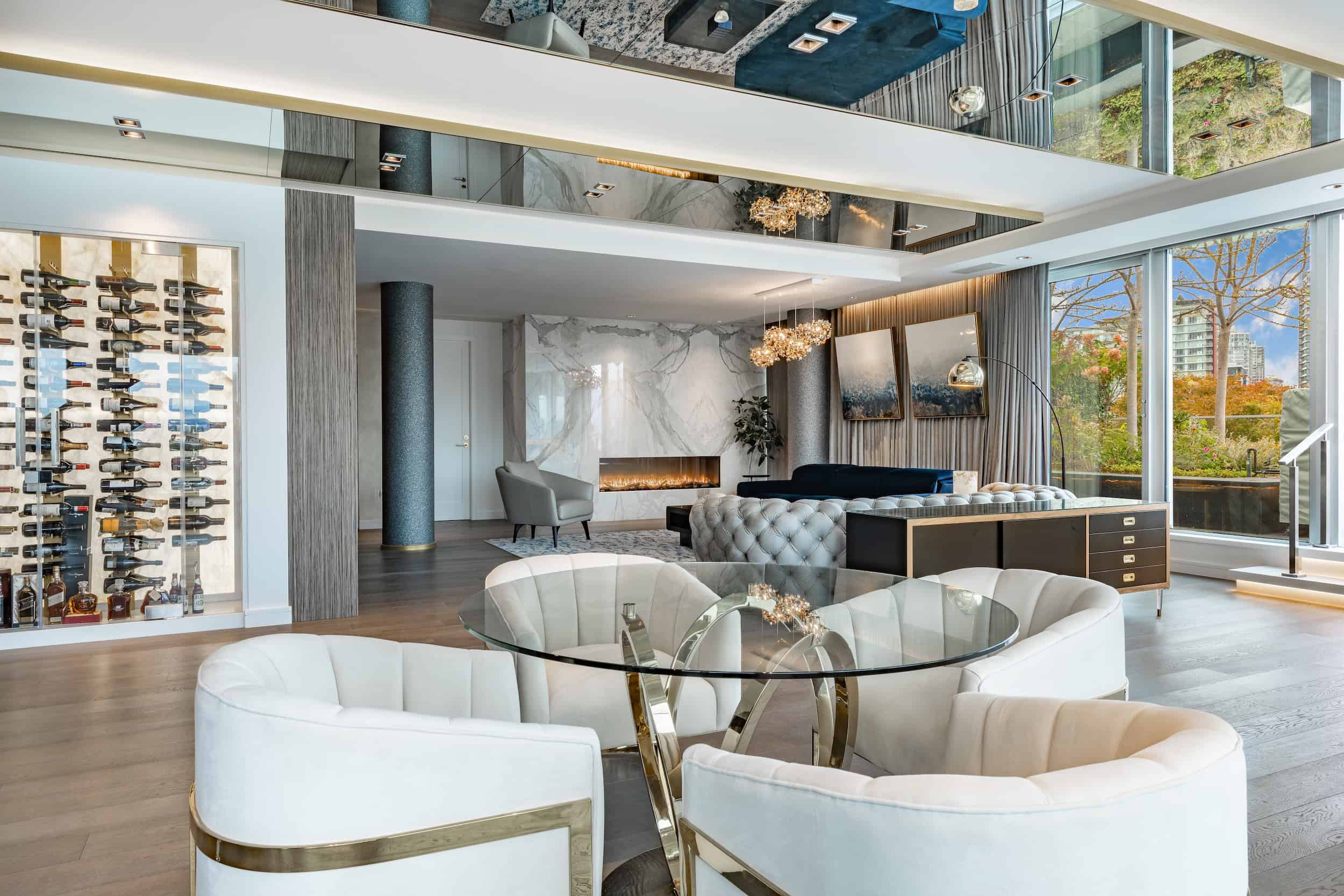
A stone entry remains handsome because drainage is controlled and cleaning methods are appropriate. A custom wood door retains its presence because finishes are renewed before the substrate suffers. A heritage façade keeps its character because repairs use compatible materials. A renovated home feels effortless because mechanical systems are serviced, humidity is managed, and details are monitored. A multi-family building preserves resident confidence because small issues do not linger.
Preventive property maintenance is the practice of protecting what is worth keeping. It respects the money invested in construction, the skill of the trades, the vision of designers, the expectations of occupants, and the long life of the building itself.
The finest properties are not merely built well. They are cared for well. That care may be quiet, scheduled, and largely unseen, but over years it becomes visible in the way a building holds itself. Clean lines remain clean. Materials age with grace. Systems perform without commotion. Owners sleep through storms.
That is why preventive maintenance matters. It is not an expense at the edge of ownership. It is one of the central acts of ownership itself.
Address: #20 – 8690 Barnard Street, Vancouver, BC V6P 0N3, Canada
Phone: 604-506-1229
Website: https://tjonesgroup.com/
Email: [email protected]
Hours:
Monday: 8:00 AM - 5:00 PM
Tuesday: 8:00 AM - 5:00 PM
Wednesday: 8:00 AM - 5:00 PM
Thursday: 8:00 AM - 5:00 PM
Friday: 8:00 AM - 5:00 PM
Saturday: Closed
Sunday: Closed
Open-location code (plus code): 6V44+P8 Vancouver, British Columbia, Canada
Map/listing URL:
Socials:
https://www.instagram.com/tjonesgroup/
https://www.facebook.com/TheT.JonesGroup
https://www.houzz.com/professionals/home-builders/t-jones-group-inc-pfvwus-pf~381177860
The company also handles multi-family construction, home maintenance, and investment advisory for property owners who want a builder with both design coordination and construction experience.
With its office on Barnard Street in Vancouver, the business is positioned to support custom home and renovation projects across the city.
Public site pages emphasize clear communication, disciplined project management, and craftsmanship meant to hold long-term value rather than short-term fixes.
T. Jones Group collaborates closely with architects, interior designers, consultants, and trades from early planning through completion.
The brand presents more than four decades of family-led building experience in Vancouver’s residential market.
Homeowners planning a custom build, estate renovation, or heritage restoration can call 604-506-1229 or visit https://tjonesgroup.com/ to start a consultation.
The business also maintains a public Google listing that can be used as a map reference for the Vancouver office.
Popular Questions About T. Jones Group
What does T. Jones Group do?
T. Jones Group is a Vancouver builder focused on custom homes, renovations, and related residential construction services.
Does T. Jones Group only work on new custom homes?
No. The public services page also lists renovations, heritage restorations, multi-family projects, home maintenance, and investment advisory.
Where is T. Jones Group located?
The official contact page lists the office at #20 – 8690 Barnard Street, Vancouver, BC V6P 0N3.
Who leads T. Jones Group?
The team page identifies Cameron Jones as Principal and Managing Director, and Amanda Jones as Director of Client Experience and Brand Growth.
How does the company describe its process?
The public process page says projects begin with an initial consultation to understand the client’s vision, lifestyle, property, goals, budget, and timeline, followed by collaboration with architects and interior designers through completion.
Does T. Jones Group work on heritage restorations?
Yes. Heritage restorations are listed on the official services page as a distinct service area focused on preserving original character while improving structure, livability, and performance.
How can I contact T. Jones Group?
Call (604) 506-1229, email [email protected], visit https://tjonesgroup.com/, and follow https://www.instagram.com/tjonesgroup/, https://www.facebook.com/TheT.JonesGroup, and https://www.houzz.com/professionals/home-builders/t-jones-group-inc-pfvwus-pf~381177860.
Landmarks Near Vancouver, BC
Marpole: A major south Vancouver neighbourhood and a gateway from the airport into the city. If your project is in Marpole or nearby southwest Vancouver, T. Jones Group’s Barnard Street office is close by. Landmark link
Granville high street in Marpole: A walkable commercial stretch with shops, services, and neighbourhood activity along Granville Street. If your property is near Granville, the Vancouver office is well positioned for local custom home or renovation planning. Landmark link
Oak Park: A well-known community park near Oak Street and West 59th Avenue. If you live near Oak Park, T. Jones Group is a practical Vancouver option for custom home and renovation work. Landmark link
Fraser River Park: A recognizable riverfront park with boardwalk views along the Fraser. If your project is near the Fraser corridor, the company’s south Vancouver office gives you a nearby point of contact. Landmark link
Langara Golf Course: A familiar south Vancouver landmark with strong local recognition. If your home is near Langara or south-central Vancouver, T. Jones Group is a local builder to consider for custom residential work. Landmark link
Queen Elizabeth Park: Vancouver’s highest point and a common geographic anchor for central Vancouver. If your property is around central Vancouver, the company remains well placed for city-based projects. Landmark link
VanDusen Botanical Garden: A major west-side destination near Oak Street and West 37th Avenue. If your home is near Oak Street or west-side Vancouver corridors, the office is still nearby for planning and consultations. Landmark link
Vancouver International Airport (YVR): A practical regional marker for clients coming from the south side or traveling into Vancouver for project meetings. If you are near YVR or Sea Island connections, the office is easy to place within the south Vancouver area. Landmark link